Hebel-Sela, S., Nir, N., Gruenwald, A., Hameiri, B., & Halperin, E. One size might not fit all: A Tailored Approach to Psychological Intergroup Interventions. Personality and Social Psychology Bulletin.
doi.org/10.1177/01461672261434701I study misinformation, political communication, and intergroup conflict — and how strategic communication can change beliefs and reduce polarization at scale.
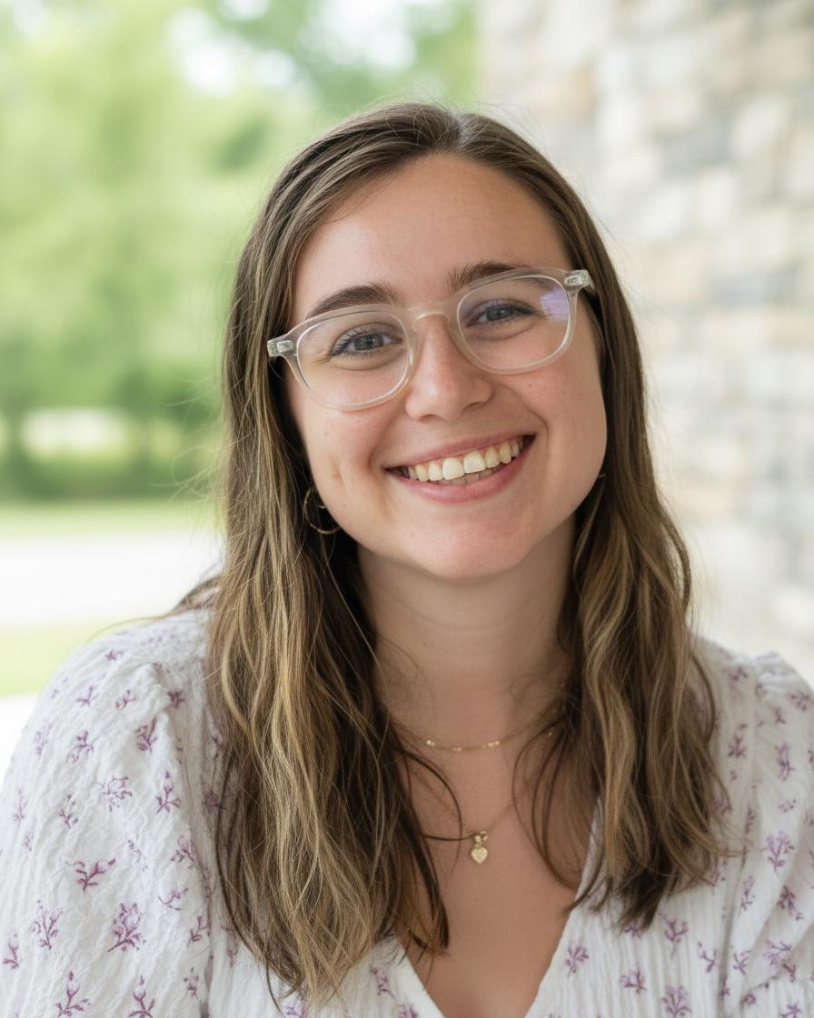
I am an incoming postdoctoral fellow at the Annenberg School for Communication at the University of Pennsylvania, where I will work with Emily Falk and Yphtach Lelkes as part of the Penn-Kalaniyot Fellowship. I completed my PhD at the Hebrew University of Jerusalem, supervised by Eran Halperin (Hebrew University) and Boaz Hameiri (Tel Aviv University).
My research sits at the intersection of political communication, social psychology, and misinformation science. I study why people embedded in intergroup conflict become more susceptible to conspiracy theories and false narratives — and how the psychological dynamics of group identity shape what people believe and share. Crucially, I am equally invested in the other side of that question: how strategic communication can be leveraged to change beliefs and reduce intergroup hostility. My work combines large-scale field experiments, machine learning, and AI-delivered messaging interventions to develop and test approaches that can work at scale, across contexts, and for real people in the midst of real conflicts.
My research has appeared in journals including Communications Psychology, Political Psychology, Current Opinion in Psychology, and Personality and Social Psychology Bulletin, and is featured in edited volumes published by Routledge. I have been recognized with the Penn-Kalaniyot Postdoctoral Fellowship, the Fulbright Postdoctoral Fellowship (awarded; declined), the Halbert Postdoctoral Fellowship (awarded; declined), and the President's Scholarship for Outstanding PhD Students at the Hebrew University of Jerusalem.
Why people embedded in intergroup conflict become more susceptible to false narratives and conspiracy theories — and the communicative conditions that amplify this effect across societies.
How the psychological dynamics of group belonging shape what people believe and share — making some messages especially sticky and others especially resistant to uptake.
Designing and testing communication-based interventions that change beliefs and reduce intergroup hostility — for real people in the midst of real conflicts.
Using large-scale field experiments, machine learning, and AI-delivered messaging to build personalized communication approaches that are effective in the wild.
* = equal contribution by the authors
Hebel-Sela, S., Nir, N., Gruenwald, A., Hameiri, B., & Halperin, E. One size might not fit all: A Tailored Approach to Psychological Intergroup Interventions. Personality and Social Psychology Bulletin.
doi.org/10.1177/01461672261434701Yair, O., Hebel-Sela, S., Cavari, A., & Efrat, A. Conspiracy Thinking and Political Conspiracy Theories: A Moderating Effect of Political Congruence? Political Psychology.
doi.org/10.1111/pops.70131Hebel-Sela, S.*, Hamieri, B.*, Tropp, L. R., Moore-Berg, S., Halperin, E., Saxe, R., & Bruneau, E. Virtual contact improves intergroup relations between non-Muslim American and Muslim students from the Middle East, North Africa and Southeast Asia in a field quasi-experiment. Communications Psychology.
doi.org/10.1038/s44271-025-00218-5Hebel-Sela, S.*, Aldar, L.*, Orian Harel, T.*, Hameiri, B., Pliskin, R., & Halperin, E. Gone Too Far? The Paradoxical Effect of Political Elite Radicalization. Political Psychology.
doi.org/10.1111/pops.13068Hebel-Sela, S., Stefaniak, A., Vandermeulen, D., Adler, E., Hameiri, B., & Halperin, E. Are societies in conflict more susceptible to believe in conspiracy theories? A 66 Nation Study. Peace and Conflict: Journal of Peace Psychology.
doi.org/10.1037/pac0000645Hebel-Sela, S., Hameiri, B., & Halperin, E. The vicious cycle of violent intergroup conflicts and conspiracy theories. Current Opinion in Psychology, 47, 101422.
doi.org/10.1016/j.copsyc.2022.101422Shuman, E., Hebel-Sela, S., Zipris, I., Hasson, Y., Hameiri, B., & Halperin, E. Advancing support for intergroup equality via a self-affirmation campaign. Group Processes & Intergroup Relations.
doi.org/10.1177/13684302221128505Adler, E.*, Hebel-Sela, S.*, Leshem, O. A., Levy, J., & Halperin, E. A social virus: Intergroup dehumanization and unwillingness to aid amidst COVID-19. International Journal of Intercultural Relations, 86, 109–121.
doi.org/10.1016/j.ijintrel.2021.11.006Ushomirsky, I., Hasson, Y., Atia, R., Attias, N., Balmas, M., Endevelt, K., Gur, T., Hameiri, B., Hebel-Sela, S., Leshem, O. A., Malovicki-Yaffe, N., Manekin, D., Perry, A., Porat, R., Saguy, T., Shuman, E., & Halperin, E. Increasing Perceived Outgroup Heterogeneity Following Exposure to Extreme Violence: An Intervention Tournament in Times of War. Personality and Social Psychology Bulletin.
Hebel-Sela, S., Hameiri, B., & Halperin, E. Personalized psychological intergroup interventions: A three-factor framework. In Petty, R., et al. (Eds.), Personalized Persuasion. Routledge.
Hebel-Sela, S., Knab, N., & Hameiri, B. Paradoxical thinking interventions in intergroup conflicts: A promising method to affect cognitions and behavior among people with extreme attitudes. In E. Halperin, B. Hameiri, & R. Littman (Eds.), Psychological Intergroup Interventions: Evidence-based Approaches to Resolve Intergroup Conflict. Routledge.
I'm always happy to discuss research, potential collaborations, or questions about my work.
shira.hebel@mail.huji.ac.il